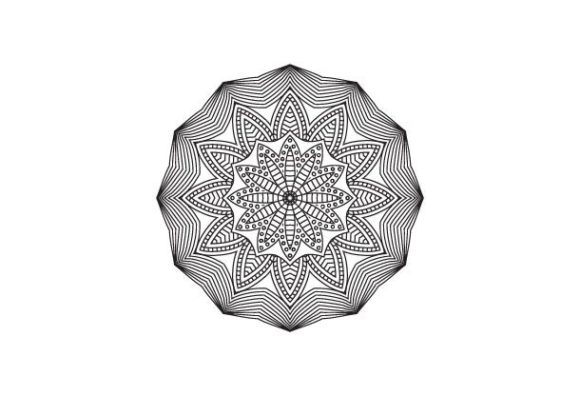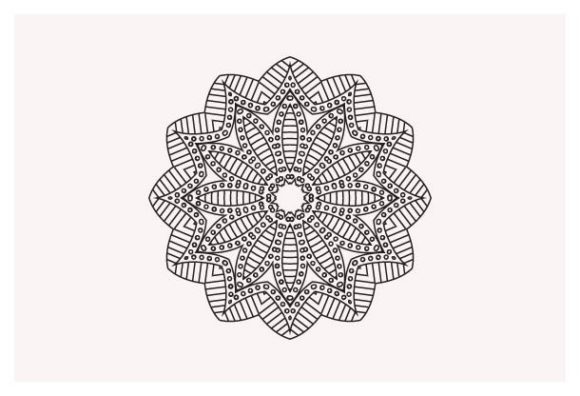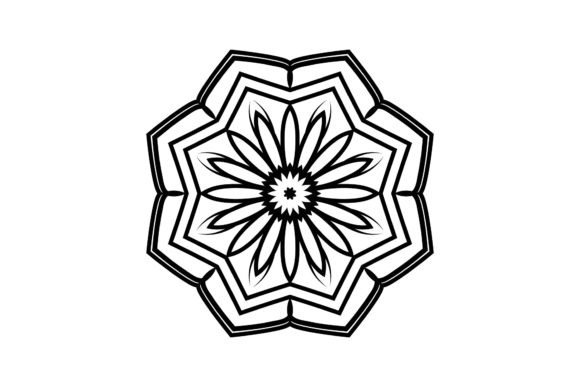
Mandala Decorative Motif Flower
As someone who’s stitched hundreds of designs across apparel, home goods, and personalized gifts—from boutique baby onesies to Etsy best-selling tote bags—I opened Mandala Decorative Motif Flower expecting elegance, but what stood out immediately was its quiet confidence. It doesn’t shout. It breathes. Centered, balanced, and layered with botanical softness—petals curl like ink blots in watercolor, yet the linework stays crisp enough for clean vector translation. This isn’t a busy mandala built for meditation apps; it’s a decorative motif designed for real cloth, real needles, and real hands.
First Impressions: Where Simplicity Meets Stitch-Ready Clarity
The 1920px × 1280px canvas gives generous breathing room—no cramped corners or pixelated edges when scaling down. At a glance, you can tell this was drawn with embroidery in mind: no ultra-thin hairlines, no overlapping shapes that’ll vanish under satin stitch, and no micro-details smaller than 1.5mm (a safe threshold for most commercial machines). The floral-mandala fusion feels grounded—not overly spiritual, not overly trendy—making it ideal for small shop owners who need versatile design assets that appeal across age groups and aesthetics.
A Real Project Test: Embroidering It on a Linen-Cotton Tea Towel
Last week, I used Mandala Decorative Motif Flower for a limited-run batch of kitchen towels for a local café’s holiday pop-up. We chose medium-weight linen-cotton blend—textured but stable—and stitched it centered on the lower corner, about 4.5" wide. With a light cutaway stabilizer and 40-weight rayon thread, the fill stitches settled smoothly into the weave without puckering. The outer petals held definition; the inner swirls read clearly without looking muddy. Customers didn’t just notice it—they paused. Touched it. Asked where we got “the flower that looks like it belongs in a grandmother’s garden and a modern studio.” That’s the quiet power of this motif: it bridges handmade warmth and contemporary polish.
Where It Shines (and Where to Pause)
Mandala Decorative Motif Flower excels in projects where subtlety adds value—not volume:
- Custom apparel: Works beautifully on sweatshirt cuffs, back yokes, or chest pockets—especially on heather grays or oatmeals where contrast feels intentional, not loud.
- Baby embroidery: Gentle scale and rounded forms suit onesies, burp cloths, and crib mobiles. Avoid dense fill areas near seams if stitching for preemies or sensitive skin.
- Embroidered patches: Clean outlines and moderate detail translate well to sew-on or iron-on patches—just confirm your patch maker accepts SVG or DXF files.
- Holiday and wedding gifts: Its organic symmetry reads as thoughtful, not generic—perfect for monogrammed pillow covers, linen napkins, or keepsake sachets.
- Etsy listings & printable mockups: The AI and EPS files render flawlessly in Adobe Illustrator for professional product previews. Use the SVG for web-friendly mockup generators—no raster artifacts.
But be mindful on:
- Stretchy fabrics: Not inherently unstable, but test on knit t-shirts first—tight curves may distort without proper tear-away + cutaway combo stabilizer.
- Curved surfaces (caps, beanies): The central density works, but avoid placing it too close to the bill seam—smaller hoop sizes (under 4") may crop subtle outer layers.
- Dark or heavily textured fabrics: Running stitch outlines help, but verify thread color contrast in person—what reads on screen won’t always translate to charcoal corduroy or black terry cloth.
- Frequent-wash items (kitchen towels, baby bibs): Keep stitch density moderate. Overly dense fills can stiffen fabric over time—review the design’s fill ratio before digitizing.
What It Does for Your Craft Business—Beyond the Stitch
When your customers see Mandala Decorative Motif Flower on a finished product, they’re not just seeing a flower—they’re sensing care. The balance says “I chose this,” not “I grabbed whatever fit.” That perception lifts perceived value, especially for handmade product sellers pricing at $38–$65 for embroidered totes or $75+ for custom nursery pillows. It also supports brand consistency: whether you’re using it on an Instagram story graphic (SVG), a printed tag (AI), or a physical patch (DXF), the core motif remains unmistakably yours.
For Etsy sellers, it’s a quiet differentiator. While others lean on script fonts and glitter effects, this motif stands out by being *unhurried*. And because it’s delivered as six digital files—including industry-standard formats like EPS and DXF—it integrates cleanly into both hand-digitizing workflows and automated production pipelines.
Practical Designer Notes Before You Stitch
You don’t need to guess. Here’s what I do every time—with Mandala Decorative Motif Flower or any new embroidery file:
- Test on scrap fabric *first*, using your exact stabilizer + thread combo.
- Check how the outermost elements hold up on thin cotton—some delicate loops may need slight simplification for sheer fabrics.
- Review stitch density visually—if digitizing yourself, ensure no overlapping fill zones that could cause thread nesting.
- Confirm hoop size compatibility: the motif fits comfortably in 5×7", but verify if your machine’s default hoop is smaller.
- Inspect small details in black-and-white mockups—this reveals clarity issues invisible on screen.
- Compare how it reads on light vs. dark backgrounds. Some subtle gradients may soften on black fabric unless you adjust thread sheen.
- Use proper stabilizer—not just “any” cutaway. Medium-weight works best for most midweight woven fabrics.
- Double-check licensing terms before selling finished items or bundling the files. Since this is listed under Illustrations and Graphics, confirm whether commercial use includes resale of physical products (it usually does—but verify).
At its core, Mandala Decorative Motif Flower isn’t just another digital download. It’s a considered starting point—a motif that respects the craft, the customer, and the quiet intention behind every handmade product. Whether you're stitching for joy, launching your first Etsy collection, or building a small shop’s signature look, this design earns its place not through flash, but through fidelity—to fabric, to function, and to the people who’ll hold what you make.