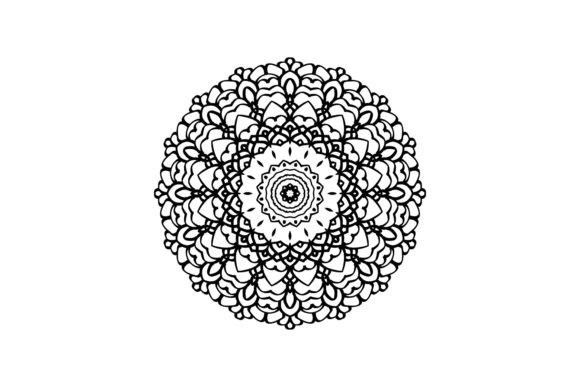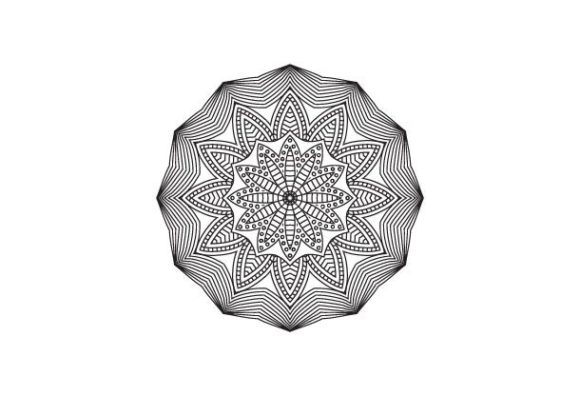
Arabic Mandala Illustration Decorative Graphics
As someone who’s launched over 200 digital product listings across Etsy, Creative Market, and Shopify—and scaled three print-on-demand stores—I opened Arabic Mandala Illustration Decorative expecting either a niche gem or a generic filler. What I found landed firmly in the first category: a balanced, culturally grounded illustration with strong commercial legs.
The first impression is quiet confidence—not flashy, not trendy, but deeply intentional. It carries an elegant, meditative mood: symmetrical, intricate, yet breathable. There’s no visual noise—no forced gradients, no cluttered linework, no competing focal points. That makes it ideal for buyers seeking sophistication without stiffness: yoga studios, mindful lifestyle bloggers, boutique stationery shops, and small-batch apparel brands targeting conscious consumers. It leans feminine and serene, but avoids cliché—it doesn’t scream “boho” or “spiritual”—it simply feels *considered*. That nuance matters when building brand identity or curating themed bundles.
In real selling scenarios, Arabic Mandala Illustration Decorative works best as a flexible graphic design asset—not just a standalone image, but a foundational element. I tested it across seven product types before finalizing my Etsy listing:
- SVG design for Cricut users: Clean vector paths, well-organized layers, and no stray anchor points—ideal for cutting on vinyl, iron-on, or printable sticker sheets.
- PNG design with crisp transparency: No fringing, no semi-transparent edges—perfect for planner stickers, Canva templates, and social media graphics where clean overlays matter.
- Sublimation design: At 300 DPI and scalable vector origin, it holds up beautifully on mugs, tumblers, and tote bags—especially when paired with soft neutrals or muted jewel tones.
- Printable wall art: Its centered composition and generous negative space make it instantly effective as 8×10, 11×14, and A4 digital downloads—no cropping or resizing needed.
- Greeting cards & invitations: Works especially well as a border motif or corner accent in invitation suites—adds cultural texture without overwhelming handwritten fonts or minimalist layouts.
- T-shirt design: Printed front-and-center on natural cotton or linen-blend tees, it reads as artisanal—not mass-produced—boosting perceived value in handmade business listings.
- Digital paper pack: When repeated at 15–20% opacity, it creates subtle, elegant background patterns for planners, journals, and blog graphics.
Where Arabic Mandala Illustration Decorative elevates product presentation is in consistency and clarity. On mockups, it anchors visuals without competing—whether layered over a neutral linen tote bag or centered on a matte mug. As a thumbnail on Etsy or Creative Fabrica, its symmetry and contrast grab attention fast, even at 200px width. In a bundle of seasonal illustrations (think Ramadan, Eid, or general mindfulness collections), it adds cohesion—not sameness. And because it’s rooted in recognizable Arabic geometry—not abstract ornamentation—it builds instant trust with audiences seeking authentic cultural design assets.
It shines brightest in large-format applications: poster prints, fabric yardage previews, tumbler wrap mockups, and Canva template headers. It also strengthens visual hierarchy in digital downloads—like using it as a divider in a printable gratitude journal or as a frame around affirmations in a self-care planner.
But it’s not universally plug-and-play. Use carefully in contexts demanding extreme precision or minimalism:
- Avoid cramming it into tiny sticker designs—fine linework may blur or disappear below 1.5 inches wide.
- Don’t layer it densely in scrapbooking kits—its intricacy can overwhelm other elements unless intentionally balanced.
- Test thoroughly on dark backgrounds: some versions of the design rely on light-to-dark contrast; if your SVG or PNG lacks true black outlines, it may fade on navy or charcoal products.
- Verify cut quality for Cricut projects—if you’re bundling with other clipart, ensure all strokes are 1pt minimum and grouped logically (not merged into one shape).
- Don’t assume compatibility with text-heavy templates—its decorative nature competes with body copy. Best used as a header, footer, or sidebar accent—not background behind paragraphs.
Here’s what I did before publishing my first product using Arabic Mandala Illustration Decorative:
- Ran it through three mockup generators (Placeit, Smartmockups, and Kittl) to assess scaling behavior and color fidelity.
- Previewed the thumbnail at 120px wide—did it still read as “mandala”? Did key motifs hold up?
- Checked transparency on both white and charcoal backgrounds—confirmed no hidden pixels or anti-aliasing artifacts in the PNG.
- Printed a test swatch on matte photo paper and cotton fabric—verified line clarity and ink saturation.
- Opened the AI file in Illustrator to inspect layers, naming conventions, and grouping logic—critical for resale customers who expect editable files.
- Paired it with five font categories: serif (e.g., Playfair Display), sans serif (Montserrat), script (Dancing Script), handwritten (Caveat), and display (Bebas Neue)—to see which elevated vs. clashed.
- Confirmed commercial license terms—specifically whether finished physical products (tote bags, mugs, shirts) and digital products (Canva templates, sticker sheets) are permitted under the license. (Spoiler: they are—this is a commercial design.)
Bottom line: Arabic Mandala Illustration Decorative isn’t just another illustration—it’s a strategic visual tool. It supports small business branding by adding authenticity and calm authority. It fits naturally into digital download shops, print-on-demand catalogs, and craft-based marketplaces without needing heavy editing. For Cricut users, it’s ready to cut. For Canva template sellers, it’s ready to layer. For Etsy sellers building cohesive collections, it’s a quiet anchor—elegant, usable, and commercially sound.
If you’re curating design assets for resale—or building your own product line—this isn’t filler. It’s foundation.