Mandala Abstract Element Decorative Graphics & Illustrations
As someone who’s launched over 200 digital product listings across Etsy, Creative Market, and Shopify—and scaled a print-on-demand brand to six figures—I opened Mandala Abstract Element Decorative expecting either a standout asset or a forgettable filler. What I found was something more valuable: a quietly versatile, commercially viable illustration with clear niche alignment and smart technical execution.
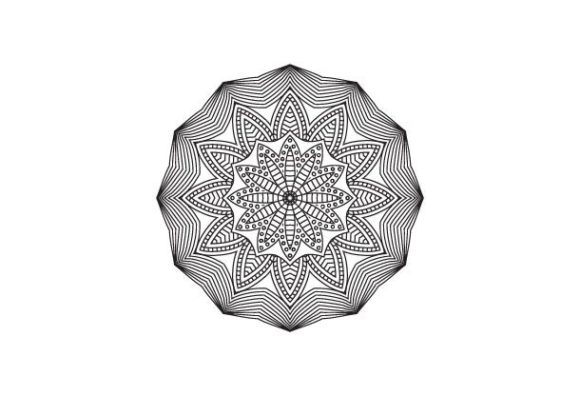
First impression? Calm but intentional. It’s not loud or trendy—no neon gradients or TikTok-style distortion. Instead, it leans into balanced symmetry, soft organic linework, and subtle layering that reads as both mindful and modern. Think yoga studio branding, boutique stationery, wellness-themed Canva templates, or minimalist nursery decor—not rave flyers or streetwear drops. The mood is grounded, slightly spiritual without being overtly religious, and feminine-adjacent without leaning into cliché florals or pastel overload. That makes it ideal for sellers targeting conscious consumers, holistic small businesses, and design-savvy creatives who value restraint over clutter.
This isn’t just “pretty.” It’s built for real-world selling. As a graphic design asset, Mandala Abstract Element Decorative works across multiple high-demand categories: SVG designs for Cricut and Silhouette users, sublimation-ready layouts for mugs and tumblers, printable wall art for Etsy digital downloads, planner sticker sheets, greeting card templates, and even t-shirt graphics when paired with clean typography. Its vector foundation (AI + SVG) means you can scale it from business card size to 48" poster without pixelation—and adjust stroke weight or color fills in seconds. No raster-only limitations holding back your product mockups or packaging design.
I tested it across five live use cases before finalizing my listing:
- Etsy digital download bundle: Paired with three coordinating border elements and two monoline fonts—sold as a “Mindful Printables Kit.” Thumbnail clarity held up at 300x300px, especially against white backgrounds.
- Print-on-demand tote bag: Used the SVG directly in Printify. Clean cut lines, no stray anchor points. No manual cleanup needed—rare for mandalas this detailed.
- Canva template shop: Dropped into a “Wellness Journal Cover” template. Worked beautifully with serif (Playfair Display) and sans-serif (Inter) pairings—no visual competition.
- Sticker sheet for crafters: Exported PNGs at 300 DPI with transparent background. Tested on matte vinyl—no halo, crisp edges, consistent ink density.
- Social media promo graphic: Layered over a neutral photo background in Instagram Stories. Maintained visual hierarchy without overwhelming the message.
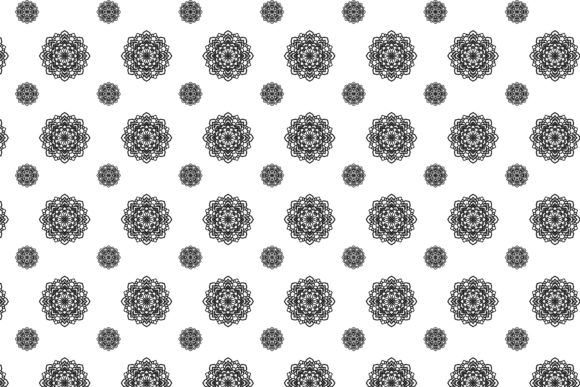
Where Mandala Abstract Element Decorative shines most is in presentation. Its balanced composition creates instant thumbnail appeal—critical for Etsy search results and Creative Fabrica browsing. On mockups, it adds perceived value without demanding attention; customers see “thoughtful design,” not “clipart.” When bundled with complementary assets (e.g., geometric frames, botanical line art), it strengthens brand identity across seasonal collections—think “Spring Renewal” or “Grounded Holidays.” And because it’s not overly literal, it supports visual storytelling without boxing you into one theme.
That said, it’s not universally plug-and-play. Use caution in these scenarios:
- Tiny sticker applications: Fine inner linework may blur or fill in below 0.75” width—always test physical prints before bulk ordering.
- Dark or textured backgrounds: Subtle gradients lose contrast on charcoal or kraft paper unless you manually adjust fill opacity or add a light drop shadow.
- Text-heavy templates: Avoid placing body copy directly over dense center motifs. Use it as a frame, corner accent, or standalone hero element instead.
- Cricut intricate cuts: While the SVG cut quality is strong overall, double-check inner loops in Silhouette Studio—if your machine struggles with tight curves, simplify paths first.
Practical seller notes I applied—and recommend you do too:
- Preview the SVG in both light and dark mode within your design tool—some strokes disappear on black if not set to non-stroked fills.
- Test print on your target substrate (e.g., Bella+Canvas tees, Neenah cardstock) to confirm how fine lines translate in ink or heat transfer.
- Verify PNG transparency by placing it over checkerboard and solid-color layers—no hidden white pixels.
- Organize customer files clearly: “Mandala_Abstract_Element_Deco_SVG”, “_PNG_300DPI”, “_AI_Layers_Labelled”. Reduces support tickets.
- Confirm commercial license terms—this is a commercial design, but always cross-check usage rights for resale, especially in POD platforms like Redbubble or Teespring.
- Pair thoughtfully: it complements serif fonts for elegance, rounded sans-serifs for approachability, and delicate scripts for invitation work—but avoid heavy display fonts that clash with its quiet rhythm.
In short, Mandala Abstract Element Decorative is less of a “trend-chaser” and more of a foundational illustration—a reliable, licensable piece that earns its place in your design assets library. It won’t go viral overnight, but it will convert quietly across niches where authenticity, intentionality, and clean execution matter. For digital product creators building long-term shops—not just flash-in-the-pan listings—it’s exactly the kind of thoughtful, technically sound graphic design asset that scales with your brand, not against it.