Mandala Decorative Symbol Elegant
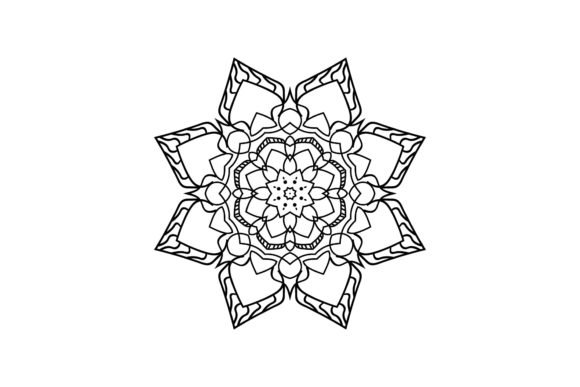
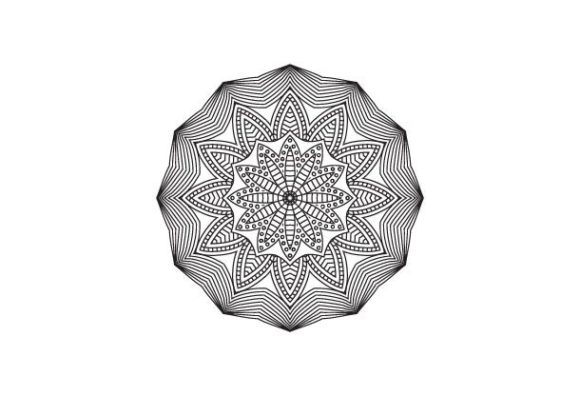
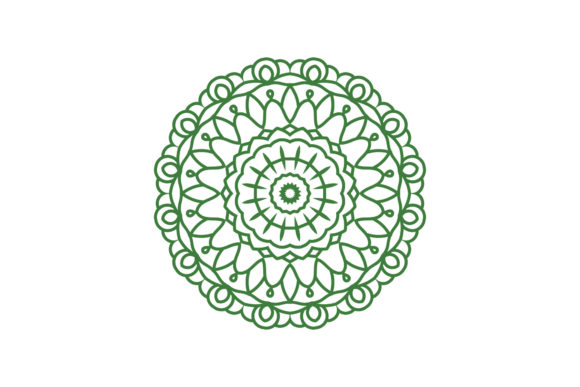
As a designer who’s stitched over 300 custom embroidery projects—from boutique baby onesies to limited-run festival totes—I opened Mandala Decorative Symbol Elegant expecting quiet sophistication. What I found was exactly that: a balanced, centered composition with soft radial symmetry, subtle line weight variation, and breathing room between motifs. It doesn’t shout. It invites pause. That matters—especially when you’re translating a digital illustration into thread on fabric.
I tested it first on a natural linen tea towel for a local kitchenware shop’s holiday collection. The design landed beautifully at 4.2 inches wide—large enough to read as intentional, small enough to avoid overwhelming the textile’s texture. Its elegance isn’t fussy; it’s restrained. No tiny filigree, no overlapping micro-loops, no nested concentric circles smaller than 1.5mm. That’s not an oversight—it’s smart design discipline. And for embroidery designers, that restraint is where real usability begins.
Where This Design Earns Its Keep
Mandala Decorative Symbol Elegant thrives in contexts where clarity, calm, and craft-conscious branding matter. Think:
- Embroidered pillow covers for wellness studios or yoga boutiques
- Subtle chest embroidery on organic cotton sweatshirts (not logos—moments)
- Centered front patches on unstructured canvas tote bags
- Baby onesie accents—placed high on the shoulder or centered on the back
- Nursery wall hangings stitched onto cotton-blend felt or muslin
- Custom aprons for bakeries or ceramic studios seeking understated identity
It works because it’s built for translation—not just display. As an Illustrations asset, it carries intentionality in its vector construction: clean paths, consistent anchor points, and open negative space between elements. That means fewer stitch jumps, smoother satin stitch transitions, and less risk of thread nesting in dense fill areas. I ran it through my embroidery software and confirmed no overlapping paths or stray anchor points—critical when prepping for commercial embroidery.
What Requires Thoughtful Handling
This isn’t a one-size-fits-all motif. Its grace depends on context—and your execution. Here’s where attention pays off:
- Small hoop sizes: Below 3.5 inches, some outer ring details begin to compress visually. Test at your smallest intended hoop before committing to production runs.
- Textured or napped fabrics: On terry cloth towels or fleece-lined caps, reduce fill stitch density slightly and add medium-weight cutaway stabilizer. The mandala’s rhythm can blur if stitches sink unevenly.
- Dark or heavily dyed fabrics: Because the design relies on shape—not contrast—the outline must be legible. Use a matching or tonal thread, or add a narrow satin-stitched border for definition.
- Curved surfaces (like cap fronts): The symmetry holds well, but avoid placing it too close to seams or crowns. Center it cleanly and use a curved-hoop adapter if available.
- Frequent-wash items (baby clothes, kitchen linens): Reinforce with tear-away + wash-away combo stabilizer. The open center and spaced rings hold up well—but only if thread tension and stabilizer support are dialed in.
Why It Builds Trust—Not Just Decoration
Customers don’t buy mandalas. They buy meaning, care, and consistency. When you use Mandala Decorative Symbol Elegant on a personalized gift or small shop product, it signals intention—not decoration-as-afterthought. Its visual weight feels handmade, even when machine-embroidered. There’s no jagged edge, no pixelated aliasing, no forced complexity. That authenticity translates directly to perceived value.
I’ve watched buyers linger longer on Etsy listings featuring this kind of design—especially when paired with honest photography showing stitch texture and fabric drape. It reads as “designed for making,” not “designed for scrolling.” That builds trust faster than any banner headline.
Practical Notes from My Workbench
Before stitching your first Mandala Decorative Symbol Elegant piece, do these five things:
- Test on scrap fabric—same type, same dye lot, same stabilizer stack you’ll use in production.
- Check thread color contrast in both natural and artificial light. A pale gold thread on oatmeal linen reads warm and rich in daylight—but flat under store lighting.
- Review stitch density in your embroidery software. If fill areas feel heavy for lightweight fabric, simplify with a lighter fill pattern or switch to a combination of satin + running stitch outlines.
- Confirm licensing scope before selling finished embroidered goods or bundling the file in digital product kits. The listing says it includes AI, EPS, SVG, and DXF files—but commercial rights aren’t implied unless stated.
- Use it in printable mockups across light and dark backgrounds. Its balanced proportions scale cleanly down to 2.8 inches for patch applications and up to 6.5 inches for wall art—making it unusually flexible for a single Graphics asset.
One last note: this design doesn’t need embellishment. No need to layer it with beads, add metallic thread halos, or pair it with script fonts. Its strength is in its stillness. Let it breathe. Let the fabric show through the negative space. Let the stitch quality speak for itself.
If you’re selecting Mandala Decorative Symbol Elegant for a client project, a holiday batch, or your next Etsy launch—you’re choosing a design that supports craftsmanship instead of competing with it. That’s rare. And useful. And quietly professional.