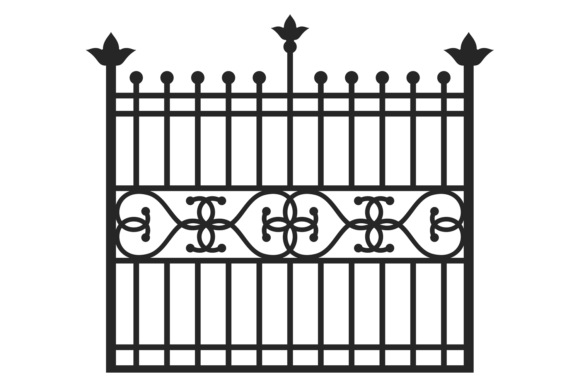
Iron Fence Decorative Black Silhouette
A Vintage Lattice That Stitches With Quiet Confidence
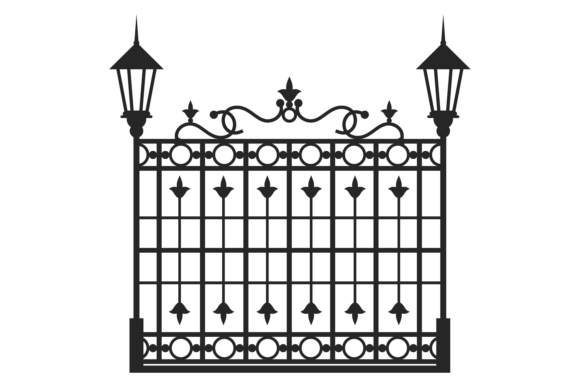
First glance at Iron Fence Decorative Black Silhouette tells you everything you need to know: it’s clean, intentional, and deeply evocative. This isn’t a busy ornamental pattern—it’s a single, confident silhouette of a classic wrought-iron fence, rendered in sharp black against white. The lattice is open but structured; the curves are subtle, not fussy. It feels like something you’d find on an old garden gate in Charleston or a vintage apothecary label—not overly romantic, not aggressively modern, just quietly timeless. As an embroidery designer who’s stitched hundreds of motifs for clients and my own craft business, I immediately saw its potential on a linen tea towel, a canvas tote, or the chest pocket of a baby romper.
Where It Shines—And Where It Needs Thoughtful Placement
I tested Iron Fence Decorative Black Silhouette as the central motif on a custom embroidered cotton tote bag for a local boutique owner. The result? Crisp, legible, and surprisingly versatile. Because the design is high-contrast and built with generous negative space, it translates beautifully into stitch—even at 3.5 inches wide. On medium-weight canvas, the fill stitches settled cleanly, and the outer satin-stitched border held its shape without puckering. It also worked well as a small-scale repeat on a kitchen apron hem, where its graphic simplicity kept the look polished, not cluttered.
It’s especially strong for personalized gifts and small shop products: think monogrammed nursery pillows (“Eleanor’s Garden” + this fence), wedding guest towels, or minimalist holiday ornaments. For Etsy sellers, it’s a smart digital embroidery file to pair with botanical or script fonts—no overdesign needed. And because it’s delivered in EPS, JPG, SVG, and transparent PNG, it’s easy to prep for printable mockups or digital product previews before listing.
Real Embroidery Considerations You Can’t Skip
This isn’t a “drop-in-and-stitch” design if you’re aiming for professional results—especially on challenging substrates. On thin cotton (like baby onesies), I recommend using tear-away + cutaway stabilizer combo to prevent shadowing and distortion. On stretchy fabric (e.g., lightweight sweatshirts), skip the hoop-only approach—baste first, then hoop with stabilizer taut beneath. And on dark fabric? Don’t assume black thread will read clearly. Test it in charcoal gray or deep navy thread on scrap first—you’ll often find a rich charcoal reads sharper than pure black on charcoal fabric.
The open lattice structure means low-to-moderate stitch density—great for reducing wear on machines and avoiding stiff patches—but that also means corners and fine intersections need attention. On curved surfaces like caps or tapered pillow covers, reposition the design so vertical lines stay upright; otherwise, the symmetry gets visually skewed. And avoid placing it too close to seams or hems on garments—the slight taper of the fence posts can get lost in stitching tension or fabric roll.
What Happens When Customers See It Stitched?
Here’s what stood out during client feedback: people consistently described it as “elegant but approachable,” “vintage without being fussy,” and “the kind of detail that makes a handmade product feel considered.” That matters—for your craft business, for your Etsy seller credibility, even for wholesale buyers scanning your line. A well-executed Iron Fence Decorative Black Silhouette doesn’t shout. It invites closer looking. That builds trust. It says you care about balance, proportion, and finish—not just speed or quantity.
On personalized gifts—say, a baby’s first blanket with their name + this fence—it elevates the whole piece. Not flashy, but meaningful. Same goes for boutique branding: use it subtly on packaging tape, tags, or a woven label. Its strength lies in restraint.
Practical Designer Notes Before You Stitch
- Always test on scrap fabric first—especially if you’re using it for commercial embroidery or client work. Check how the outer edge stitches behave on your target fabric weight and weave.
- Review thread color contrast carefully. Black-on-white is classic, but try deep forest green or slate blue on cream linen for a softer seasonal variation.
- Confirm hoop size compatibility. While the design scales well, very tight hoops (under 4”) may compress delicate inner lattice points—zoom in on your embroidery software to inspect stitch placement before finalizing.
- Inspect small details in both black-and-white and grayscale mockups. Some screen displays flatten contrast; what looks bold on your monitor might soften on fabric.
- Use appropriate stabilizer. For embroidered patch applications, switch to no-show mesh for breathability; for sweatshirt embroidery, go heavier—cutaway with light topping.
- Verify licensing terms. Since Iron Fence Decorative Black Silhouette is categorized under Illustrations and Graphics, confirm whether the license permits resale of finished physical items (yes, in most cases) and redistribution of the digital embroidery file (typically no).
Final Thought: A Design That Earns Its Place
Not every black silhouette has staying power. But Iron Fence Decorative Black Silhouette does—because it balances clarity with character, simplicity with substance. It works for custom apparel, holiday embroidery, nursery decor, and even digital product assets for creative entrepreneurs building cohesive brand libraries. It won’t dominate a garment, but it will anchor it. It won’t scream for attention—but it will earn respect, stitch by thoughtful stitch.
If you’re curating design assets for your small shop product line or building a portfolio of reliable machine embroidery designs, this one belongs in your working folder—not just your inspiration board.